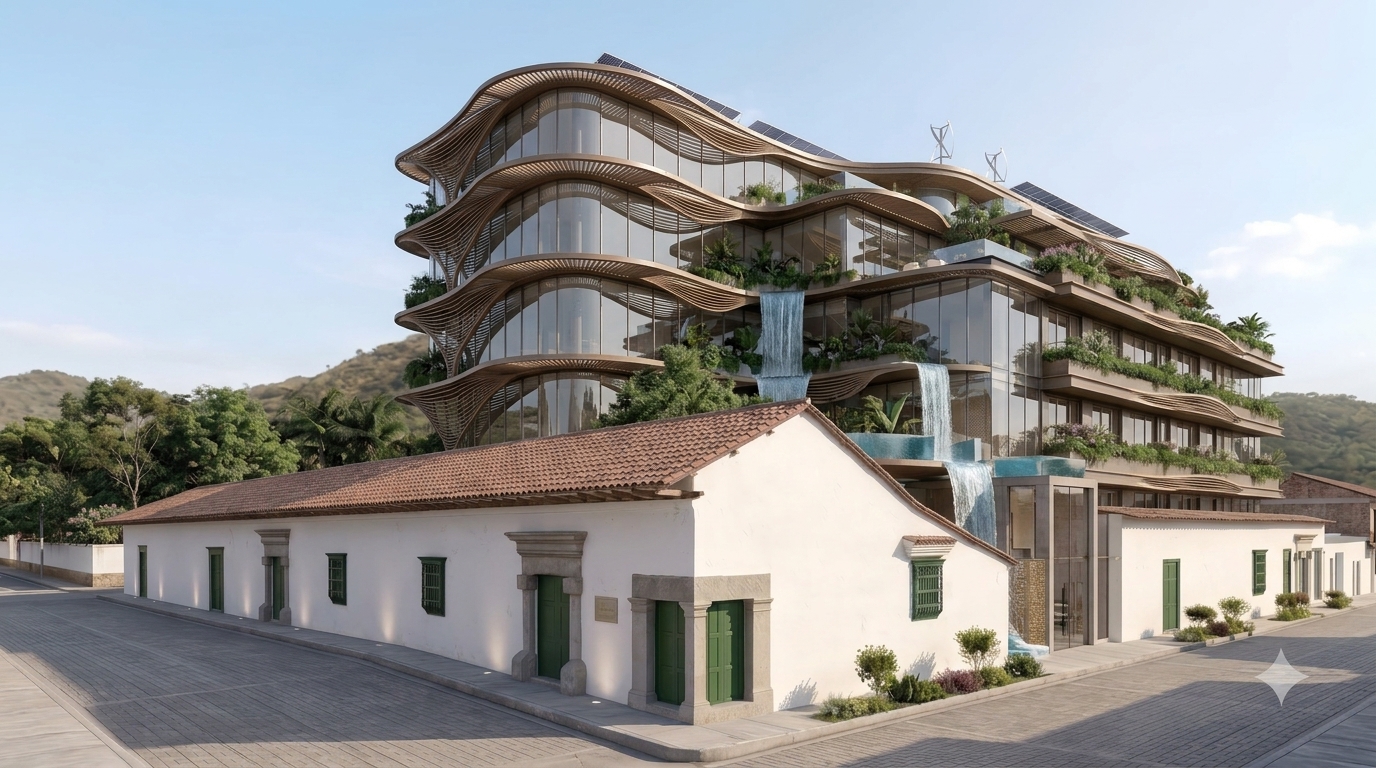
Colombia possesses one of the most comprehensive and sophisticated legal frameworks for cultural heritage protection in Latin America. For any investor, real estate developer, or buyer interested in acquiring a property designated as a Cultural Interest Asset (BIC), understanding this legal infrastructure is essential. This article provides an academic synthesis of current regulations, quantified tax incentives, and statutory procedures applicable to prime assets such as Casa del Virrey in Mariquita, Tolima.
Why is this legal framework critical for an investor or developer?
- Superior Legal Certainty (Approved PEMP - Res. 0121): Mariquita's Historic Center benefits from a formally enacted Special Management and Protection Plan (Resolution 0121 of 2025). The colonial casona is officially cataloged under Level 2: Architectural Conservation, providing definitive, transparent urban zoning rules with legal precedence over municipal land-use plans.
- 100% Income Tax Shield: Article 14 of Law 1185 of 2008 and Decree 1080 of 2015 authorize a 100% income tax deduction for approved conservation investments and expenses directly from net taxable income, amortizable over up to five (5) fiscal years.
- Immediate Cash Monetization via CoCrea (165% CID Tax Credits): Foreign investors or corporate investment vehicles in pre-operational stages with no immediate taxable income in Colombia can certify heritage works before CoCrea/MinCultura to receive CID bonds freely tradable on the Colombian stock exchange, monetizing into immediate cash with a net non-refundable cash rebate of 35% to 42% of total project costs.
- Unrestricted Development on Full City Block (6,038 m²): Level 2 BIC designation safeguards the corner manor's colonial facades and exterior typology while explicitly authorizing interior functional modernization and high-density contemporary architecture (hotel, commercial, residential, or health & wellness) across the 5,000+ m² unbuilt remainder of the urban block.
- Favorable Municipal Capital Gains & State Grants: Mariquita's master plan (POT Agreement 019/2004) fixes municipal surplus-value capture (plusvalía) at the statutory legal minimum of 30% (leaving 70% to the developer), while the PEMP unlocks access to the Cultural Heritage Compensatory Fund, FONTUR non-reimbursable tourism grants (up to 80%), and preferential rediscount credit lines from FINDETER and IDB Invest.
Academic & Legal Notice: This article is for technical, educational, and informational orientation purposes. It does not replace specialized legal, urbanistic, or tax counsel. Interested parties should verify specific intervention plans with the Municipal Planning Department of Mariquita and Colombia's Ministry of Cultures, Arts, and Knowledge.
Table of Contents: Legal & Heritage Framework
1. The Constitutional Mandate: Article 72
The foundation of Colombia’s entire heritage preservation system is anchored in the Political Constitution of 1991. Article 72 clearly outlines the duties of the State and the co-responsibility of private property owners:
"The Nation's cultural heritage is under the protection of the State. Archaeological heritage and other cultural property forming national identity belong to the Nation and are inalienable, unattachable, and imprescriptible."
- Article 72, Political Constitution of Colombia (1991). Full text: secretariasenado.gov.co.
It is vital to distinguish that while Article 72 treats archaeological heritage as inalienable State property, privately owned colonial buildings such as Casa del Virrey remain private property. They can be freely bought, sold, and developed under private title, subject to the special BIC protection framework detailed below.
2. Law 397 of 1997: General Culture Act
Law 397 of August 7, 1997 established the overarching statute on culture in Colombia and defined the State’s core principles regarding national cultural heritage. Known as the General Culture Act, it recognized cultural diversity as the bedrock of national identity and mandated the protection, recovery, sustainability, and dissemination of cultural heritage.
Article 4 of Law 397/1997 defines cultural heritage as the collection of all tangible assets, intangible manifestations, and cultural expressions of Colombian nationality: among them, buildings of historical and architectural value from all eras, including Spanish colonial (16th–19th centuries). This definition directly applies to properties like Casa del Virrey, whose rammed-earth walls, stone arcades, and Spanish clay tile roofs represent an irreplaceable 18th-century architectural testimony.
Official text available at the Senate Secretariat: Law 397 of 1997: Full Text.
3. Law 1185 of 2008: The Major Heritage Reform
Law 1185 of March 12, 2008 represents the most significant reform to Colombia's heritage regime since 1997. This law amended Law 397/1997, strengthening the National Cultural Heritage System and introducing modern planning and management instruments.
Key Legal Innovations
- Cultural Interest Assets (BIC): Consolidates and clarifies BIC status, establishing that cultural property with exceptional architectural or historic value is protected via administrative decree.
- Special Management & Protection Plan (PEMP): Establishes the PEMP as a master management & urban planning tool. The PEMP overrides municipal zoning master plans (POT).
- National Cultural Heritage System: Coordinates policy across the Ministry of Culture, regional heritage councils, ICANH, and universities.
- Private BIC Ownership: Explicitly permits private ownership of BIC assets. Acquiring a BIC property in Colombia is fully legal for national and international individuals or corporations.
- Tax Incentives (Article 13): Property owners contributing to BIC preservation qualify for national income tax deductions and local property tax exemptions.
Official Legal Source: SISJUR: Law 1185 of 2008.
4. Complete Legal Framework: Laws, Decrees & Resolutions
Political Constitution
Art. 72 (1991)
Foundational constitutional mandate for cultural heritage protection. Establishes the Nation's cultural heritage as inalienable, unattachable, and imprescriptible.
Read Full Text →Laws 397 / 1997 & 1185 / 2008
General Heritage & Culture Statute (BIC)
Establishes the legal protection regime for Cultural Interest Assets (BIC), prior intervention authorization requirements, and the 100% income tax deduction for certified conservation and PEMP expenditures (Art. 14 Law 1185).
Read text on SISJUR →Decree 1080 / 2015
Single Regulatory Decree for the Culture Sector
Compiles national heritage regulations. Governs PEMP rules, intervention classifications, statutory approval procedures, and Article 2.4.2.1 provisions on deductible expense caps and 5-year deduction periods.
Consult on SUIN-Juriscol →Law 388 / 1997 (Art. 48)
National Conservation Burden Compensation Framework
National statutory mandate requiring municipalities to compensate owners of properties under conservation treatment through economic compensation, transferable development rights, and local tax relief.
Read Art. 48 on Senate Portal →Agreement 019 / 2004 (Mariquita POT)
Basic Territorial Planning Plan (PBOT)
Formally lists Casa de los Virreyes among Mariquita’s heritage buildings (Art. 343), establishes conservation treatment for historically and architecturally important properties, orders tax incentives and conservation compensations (Arts. 123 & 378), creates the Compensation Fund (Art. 379), and locks municipal plusvalía participation at the legal floor of 30% (Art. 408).
Read Official Agreement (PDF) →Mariquita POT Urban Study
Technical Urban Planning Document
Identifies and formally locates Casa de los Virreyes at the Calle 2 / Carrera 3 corner, documenting its architectural legacy and recording its direct historical association with visiting viceroys and the Royal Botanical Expedition.
Consult Official PBOT (PDF) →Resolution 0121 / Mariquita PEMP (2025)
Special Management & Protection Plan (MinCultura)
Official statutory instrument governing the nationally protected Historic Center. Categorizes Casa de los Virreyes under Level 2: Architectural Conservation, creates the Cultural Heritage Compensation Fund (Art. 152), establishes the additional density formula with a 30% commercial factor (VC = V1 × AE), and unlocks public funding via FONTUR, IDB, and Procultura (Art. 154).
Decree 1080 / 2015 (Art. 2.4.1.2.4)
Level 2: Architectural Conservation
Defines permitted interventions for Level 2 assets: mandatory preservation of external volumetry and street facades, with express statutory authorization for interior modernization, layout reconfiguration, and demolition/replacement of modern additions.
Read Article on SUIN-Juriscol →Decree 763 / 2009 (D. 1080)
Deductibility of Maintenance & Conservation Costs
Governs statutory conditions under which conservation, formulation, and maintenance expenses are fully deductible from income taxes when approved and certified by heritage authorities.
Read Decree 763/2009 on SISJUR →5. What is a Cultural Interest Asset (BIC)?
A Cultural Interest Asset (BIC) is the official legal designation granted by the Colombian State to cultural heritage assets that, due to their historical, architectural, urban, artistic, aesthetic, symbolic, or scientific value, warrant special state protection.
BICs are categorized as either National (designated by the Ministry of Culture, Arts, and Knowledge) or Territorial (departmental or municipal), designated by regional or local governments. Casa del Virrey in Mariquita holds municipal BIC status with recognized historical interest in the regional heritage inventory of northern Tolima. In municipal planning instruments, such as Municipal Agreement 019 of 2004 and the Master Zoning Plan (POT) diagnosis, the property is formally recorded under the historic name Casa de los Virreyes, explicitly confirming its exact address and cadastral location at the corner of Calle 2ª and Carrera 3ª. Furthermore, the Special Management and Protection Plan (PEMP) for Mariquita's Historic Center, approved via Resolution 0121, formally catalogs this corner colonial manor house under Level 2: Architectural Conservation.
| BIC Category | Competent Authority | Protection Level | Management Instrument |
|---|---|---|---|
| National BIC | Ministry of Culture, Arts, and Knowledge | Highest level. Any intervention requires national ministerial approval. | National PEMP |
| Departmental BIC | Departmental Government / Heritage Council | Intermediate regional protection. | Departmental PEMP |
| Municipal BIC | Municipal Mayor's Office / Local Planning Dept | Local preservation. Authorization granted by municipal planning authority. | Municipal PEMP or POT Guidelines |
6. The Special Management and Protection Plan (PEMP)
The PEMP is the cornerstone instrument of Colombian heritage regulation. It acts as the technical and legal "owner's manual" for a BIC, explicitly defining permitted uses, structural boundaries, and development parameters for a historical asset or historic urban district.
What Does a PEMP Regulate?
- Protected Area (AA): The exact physical footprint of the BIC subject to total conservation.
- Influence Zone (ZI): The immediate surrounding buffer zone subject to height, facade, and material restrictions to preserve the visual environment.
- Permitted Intervention Tiers: Approved construction scopes per sector: full restoration, volumetric preservation, consolidation, or partial demolition of modern additions.
- Allowed Land Uses: Whether the asset may be repurposed for residential, luxury hospitality, commercial, cultural, mixed-use, or institutional functions.
- Management Standards: Technical parameters regarding materials, facade colors, compatible structural methods, and restoration guidelines.
Legal Certainty in Mariquita: PEMP regulations possess legal precedence over municipal master zoning plans (POT). Mariquita's Historic Center benefits from an approved PEMP enacted under Resolution 0121. In its official property schedule, the historical casona located at the corner of Calle 2ª and Carrera 3ª (officially recorded as Casa de los Virreyes) is designated as Level 2 (Architectural Conservation). Under Decree 1080 of 2015 (Article 2.4.1.2.4), Level 2 enforces facade and typological preservation while explicitly authorizing internal functional adaptation, modern layout restructuring, structural reinforcement, and partial demolition or replacement of non-historic additions.
7. Step-by-Step Acquisition & Intervention Workflow for a BIC
Heritage Title Verification
Request the Certificate of Tradition and Title (Folio de Matrícula Inmobiliaria) from the Superintendency of Notaries and Registry. BIC property status must be registered as a marginal note. Verify with the local Mayor's Office whether an approved PEMP is currently in force.
PEMP & Regulatory Review
If an adopted PEMP exists, it dictates all development terms and overrides municipal POT zoning. If no PEMP is active, Decree 1080/2015 and Ministry of Culture general directives apply. The municipal Planning Department serves as the primary municipal point of contact.
Architectural & Intervention Design
All plans must be engineered by architects specialized in heritage restoration, complete with descriptive memory, scaled blueprints, photographic records, and technical justification for all structural interventions. Materials compatible with original rammed-earth masonry must be formally documented.
Prior Cultural Authorization
For National BICs, applications are submitted to the Ministry of Culture, Arts, and Knowledge (CAN, Bogotá). For Territorial BICs, applications go to the municipal heritage council. Statutory response time is 30 business days.
Urban Construction Licensing
Upon securing cultural heritage clearance, the owner files with the local Urban Curador for a formal restoration, adaptation, or new construction license. Cultural clearance is a mandatory prerequisite for building permits.
Execution & Technical Oversight
Construction proceeds under the supervision of a certified heritage inspector with periodic photographic logging. Upon completion, authorities conduct a final verification visit and update the asset's standing in the national BIC inventory.
8. Rights, Incentives & Obligations for BIC Property Owners
Investment Opportunities & Strategic Advantages
- BIC status bestows an irreplaceable brand identity impossible to replicate on vacant land.
- Significant market appreciation driven by demand for luxury boutique hospitality and eco-cultural tourism.
- Access to national income tax deductions and municipal property tax exemptions for heritage preservation.
- Potential 100% real estate property tax reduction for properly maintained historic structures.
- The BIC mark provides a high-end competitive differentiator in real estate positioning.
- Eligibility for public co-funding and international cultural grants (UNESCO, OAS, OEI) for restoration projects.
- Heritage-anchored hospitality projects capture average daily rate (ADR) premiums between 18% and 50%+ based on international empirical studies (PKF/CBRE; Boston Hospitality Review), alongside enhanced commercial asset valuations recognized by Tinsa and Camacol.
Regulatory Obligations & Developer Responsibilities
- Major structural modifications require advance authorization from cultural authorities.
- Restoration designs must be executed by accredited heritage restoration specialists.
- Original declared historical walls within the protected BIC footprint cannot be demolished.
- Failure to comply can trigger administrative fines up to 500 SMLMV (minimum monthly salaries).
- Properties must be maintained in good repair; deliberate neglect is subject to legal penalties.
- The State holds a right of first refusal only under rare, specialized eminent domain acquisitions.
9. Practical Application: Casa del Virrey in Mariquita, Tolima
In the specific case of Casa del Virrey (Calle 2ª Nº 2-87 / Carrera 3 # 1-70, Mariquita, Tolima), Colombian heritage conservation laws provide comprehensive institutional and legal certainty:
The estate is explicitly cataloged across local planning instruments: Municipal Agreement 019 of 2004 and the Master Zoning Plan (PBOT) formally identify Casa de los Virreyes at the Calle 2 / Carrera 3 intersection. Furthermore, Resolution 0121, which enacts the Special Management and Protection Plan (PEMP) for Mariquita's Historic Center, officially categorizes the casona under Level 2: Architectural Conservation.
Under the regulatory regime of Decree 1080 of 2015 (Article 2.4.1.2.4), the colonial casona (293 m²) preserves its authentic exterior typologies and street facades, while granting express statutory authorization for internal functional adaptation, modern layout reconfiguration, structural reinforcement, and high-end repurposing (luxury hotel suites, signature culinary spaces, wellness spa, or private corporate retreat).
Simultaneously, the historic casona occupies only a fraction of the total 6,038 m² full city block parcel. The remaining ~5,745 m² consist of uncataloged modern secondary structures and open land that can be cleared, repurposed, or developed into new multi-story hotel wings, residences, medical facilities, or retail arcades in strict compliance with PEMP volumetric and height parameters.
On the financial and fiscal front, both national and local legislation provide quantified advantages: nationwide, Article 14 of Law 1185 of 2008 and Article 2.4.2.1 of Decree 1080 of 2015 grant a 100% deduction in net taxable income for certified conservation and PEMP expenditures. Locally, Mariquita's PBOT (Agreement 019 of 2004, Art. 408) locks municipal plusvalía participation at the statutory minimum of 30% (leaving 70% of incremental value as net gain for the developer), while the PEMP (Resolution 0121 of 2025, Art. 152.5) regulates compensatory payments for additional building density through the explicit formula VC = V1 × AE (where V1 equals 30% of commercial construction cost per m²). Additionally, Articles 151 to 154 provide the regulatory framework for the municipal Cultural Heritage Compensation Fund to co-fund restorations in Level 2 assets (subject to municipal constitution and budget allocation), alongside access to co-financing from FONTUR, FINDETER, the IDB, Mining Royalties, and Procultura Stamp revenues.
Valuation & Rate Premium Outlook (+18% to +50% ADR): Industry benchmarks published by PKF / CBRE Hotels Research reveal that historic resort hotels command an average daily rate (ADR) premium of 17.7% to 24.9% over conventional properties, climbing to over 50% for landmark iconic heritage destinations (Boston Hospitality Review). Moreover, national infrastructure guidelines from Camacol (COMPES, p. 69) recognize the commercial exploitation rights of BIC properties, while specialized asset appraisal criteria from Tinsa affirm that irreplaceable cultural and architectural assets capture superior long-term appreciation over standard real estate.
10. Co-Financing Mechanisms, Subsidies & Heritage Capital for Level 2 Assets (FONTUR, IDB, MinCultura CoCrea & PEMP Funds)
A widespread misconception among international investors is that acquiring and restoring a heritage property in Colombia imposes a lonely, unassisted financial burden. Contemporary Colombian legislation and multilateral frameworks have established one of the most generous ecosystems of public co-financing, non-reimbursable subsidies, concessional debt, and tradeable tax rebates in Latin America, engineered specifically to catalyze projects in properties designated under Level 2: Architectural Conservation.
These mechanisms allow a developer to construct a highly optimized capital stack, wherein heritage preservation and functional adaptation works are substantially cushioned by non-dilutive public funds and secondary-market tax liquidity.
Regulatory & Financial Simulation Notice
The financial figures, tax percentages, and co-financing structures presented below are based on prevailing Colombian cultural, urban, and tax statutes (Law 397/1997, Law 1185/2008, Law 1955/2019 Art. 180, Law 2068/2020, Decree 1080/2015, and Resolution DM 0121/2025). The effective monetization yields of CoCrea CID tax certificates (estimated between 35% and 42% net cash return with typical 10%–15% secondary market discounts) and the FONTUR co-financing range (30% to 100% according to proponent category, with up to 95% for Category 6 municipalities) constitute illustrative financial simulations subject to project qualification, competitive public calls, private market liquidity, and municipal budgetary enactment of compensatory funds.
Comparative Matrix: Public Funds, Subsidies & Financing Lines for Level 2 BICs
| Mechanism / Funding Source | Statutory Legal Basis | Financial Quantum / Benefit | Eligible Level 2 Scope | Developer / Investor Access Route |
|---|---|---|---|---|
| Mariquita Heritage Compensatory Fund | Mariquita PEMP (Res. DM 0121/2025, Arts. 151–154) | Capitalized by 30% municipal plusvalía and density compensations (VC = V1 × AE with V1 at 30%). Subject to municipal constitution and budget allocation. |
Facade restoration, roofing rehabilitation, structural stabilization, and immediate urban realm enhancement. | Direct application to the Municipal Planning Secretariat and Mariquita Technical Heritage Committee. |
| CoCrea 165% Tax Incentive (CID Securities) | Law 1955/2019 Art. 180, Law 1834/2017, and Decree 697/2020 | 165% deduction in net taxable income on total invested capital. Issues tradeable, dematerialized CID tax certificates. | Technical pre-investment studies, physical restoration, cultural/culinary adaptation, and heritage revitalization. | Annual competitive MinCultura-CoCrea call. In secondary market liquidity scenarios (with typical 10%-15% discounts), generates an estimated 35%-42% net cash return. |
| Direct BIC Income Tax Deduction | Tax Code Art. 56-1, Law 1185/2008 Art. 14, Decree 1080/2015 Art. 2.4.2.1 | 100% deduction in net taxable income for certified conservation expenditures, amortizable over up to 5 consecutive tax periods. | Conservation plan drafting, engineering forensics, architectural supervision, and physical restoration labor. | Certification issued by the Ministry of Culture or territorial authority, deducted directly on corporate/individual DIAN tax filings. |
| FONTUR: Tourism Infrastructure Grants | Law 300 of 1996 & Law 2068 of 2020 (National Tourism Act) | 30% to 100% non-reimbursable co-financing according to proponent category (up to 95% for Category 6 municipalities like Mariquita under Manual M-DMI-001). | Tourism infrastructure, cultural interpretation centers, artisan walks, public access plazas, and heritage signage. | Joint application submitted through Mariquita Mayor's Office or Tolima Gobernación, or via Public-Private Partnership (APP / Law 1508/2012) using RNT-registered operators. |
| FONTUR: Pre-Investment & Engineering Studies | Law 2068 of 2020 & FONTUR Manual M-DMI-001 | Up to 100% non-reimbursable financing for specialized diagnostic and feasibility studies. | LiDAR point-cloud scanning, seismic vulnerability models, materials conservation testing, and sustainable hotel business plans. | Application through FONTUR's National Project Bank under the Heritage Destination Competitiveness line. |
| Mobile Phone Consumption Tax (INC Telefonía) | Tax Code Art. 512-2 & Decree 1080 of 2015 Art. 2.11.1 | 30% of mobile phone tax revenues allocated to culture at the territorial level (macro cultural funding). | Emergency structural stabilization, roof repair, master plan drafting, and physical restoration matching in BIC municipalities. | Territorial budgetary distribution from MinCultura and Tolima Gobernación to municipal cultural agendas. |
| FINDETER: Subsidized Rediscount Lines | Sustainable Cities & Tourism Infrastructure Facility (Decree 4167/2011) | Concessional credit with interest rate subsidies (200 to 300 bps below benchmark IBR/DTF), up to 15-year tenors and 3–5 years principal grace. | Boutique hotel construction, wellness clinics, recreational infrastructure, and commercial facilities integrated into historic sites. | Originated through commercial tier-1 banks backed by FINDETER development credit lines. |
| IDB Invest: Blended & Sustainable Finance | Inter-American Development Bank Climate & Sustainability Facility | Senior concessional debt + technical cooperation grants for green building certifications (EDGE / LEED). | Adaptive hospitality reuse featuring water efficiency, net-zero carbon targets, and regional employment creation. | Direct application to IDB Invest private sector window for structured regenerative hospitality assets. |
Immediate Cash Liquidity: CoCrea CID Securities for Foreign Buyers
Foreign investors or newly formed Special Purpose Vehicles (SPVs) in the construction phase often lack taxable income in Colombia during their initial development years to offset a 165% tax deduction directly.
The CoCrea mechanism solves this structural challenge through financial market liquidity: upon certifying heritage investments into an approved BIC project, the Ministry of Culture issues Certificados de Inversión o Donación (CID). CIDs are negotiable dematerialized securities registered in the Central Securities Depository (DCV). The developer can sell these securities on the secondary capital market to established Colombian corporate taxpayers (financial institutions, retailers, infrastructure firms) at a market discount (typically 10% to 15%). In this illustrative financial simulation, this translates into an estimated net cash return of 35% to 42% on total capital deployed into the historic casona, subject to secondary market liquidity.
Structuring the "Capital Stack" for Casa del Virrey
Across the 6,038 m² full urban block of Casa del Virrey, a master developer can construct an accretive financial architecture by separating asset components in an illustrative simulation:
- Colonial BIC Casona (293 m²): Funded using CoCrea CID secondary sales (estimated 35%-42% net cash return simulation) + municipal PEMP Compensatory Fund and cultural co-financing for roofing, facade, and seismic retrofitting.
- New Construction Land (~5,745 m²): Funded via FINDETER subsidized rediscount debt (3-year principal grace period), retaining 70% of municipal plusvalía value creation (30% POT floor).
- Strategic Advantage: The net effective capital cost to preserve the historic colonial asset is substantially cushioned, while the hotel project captures the full international room rate premium (+18% to +50% ADR over conventional resorts).
11. Competent Authorities & Official Reference Links
| Entity / Authority | Jurisdiction, Heritage Role & Funding Programs | Official Portal |
|---|---|---|
| Ministry of Culture, Arts, and Knowledge | Highest authority for National BIC assets. Approves PEMP master plans, intervention permits, and CoCrea heritage projects. | mincultura.gov.co |
| CoCrea (Corporación Colombia Crea Talento) | Manages the 165% tax deduction application calls and issues negotiable CID securities for certified heritage restoration outlays. | colombiacrea.org: CID Incentive |
| FONTUR (National Tourism Fund) | Provides 30% to 100% non-reimbursable grants (up to 95% for Category 6 municipalities like Mariquita under Manual M-DMI-001) for tourism infrastructure and pre-investment studies connected to BIC properties. | fontur.com.co: Manual M-DMI-001 (PDF) |
| FINDETER (Territorial Development Bank) | Originates rediscount credit lines with subsidized interest rates (200-300 bps below benchmark) for sustainable tourism and heritage projects. | findeter.gov.co: Rediscount Lines |
| ICANH: Colombian Institute of Anthropology & History | Manages national archaeological heritage and official national BIC registry databases. | icanh.gov.co: Heritage Management |
| Mariquita Mayor's Office: Planning Dept | Manages the municipal Heritage Compensatory Fund (PEMP Arts. 151–154) and issues local building licenses in historic zones. | sansebastiandemariquita-tolima.gov.co: Official PEMP |
| Government of Tolima: Cultural & Tourism Secretariat | Directs regional heritage policy, departmental tourism co-funding, and mandatory mobile phone tax (INC) allocations. | tolima.gov.co: Mariquita Tourism |
| SUIN-Juriscol: National Legal Repository | Official legal database of the Colombian government for updated laws, decrees, and administrative jurisprudence. | SUIN: Decree 1080 of 2015 (Culture Sector) |
| Función Pública: Regulatory Repository | Official portal for accessing full, updated statutory texts of Colombian laws, decrees, and administrative resolutions. | alcaldiabogota.gov.co/sisjur |
12. Frequently Asked Questions for Heritage Investors & Developers
Direct statutory, financial, and technical answers to key inquiries regarding the acquisition, co-financing, tax incentives, and development of Cultural Interest Assets (BIC) in Colombia.
Can restoration works on Level 2 BIC heritage properties in Colombia be co-financed by public funds?
Yes, through multiple non-reimbursable public funding and tax monetization channels. Properties classified under Level 2 (Architectural Conservation) are legally eligible for public co-financing. Locally, the Cultural Heritage Compensatory Fund (Mariquita PEMP, Arts. 151–154, subject to local municipal constitution and budgeting) contemplates support for facade restoration, roofing, and structural consolidation; nationally, CoCrea provides a 165% income tax deduction via tradeable CID securities; FONTUR provides 30% to 100% non-reimbursable co-financing depending on eligible applicant category and tourism investment line; and at a macro level, the Colombian Tax Code (Art. 512-2) allocates 30% of national mobile phone tax revenues to territorial cultural programs (Decree 1080/2015 Art. 2.11.1).
Statutory citations: Law 1185/2008, Law 1834/2017, Law 2068/2020, Decree 1080/2015, and MinCultura Resolution DM 0121/2025.
How does the 165% CoCrea tax incentive work and how can a foreign investor monetize it without Colombian taxable income?
Through the secondary capital market sale of negotiable CID tax securities. Under Article 180 of Law 1955 of 2019, Law 1834 of 2017, and Decree 697 of 2020 (DUR 1080/2015 Arts. 2.12.2.3.4 to 2.12.2.3.7), capital investments into certified BIC restoration projects yield a 165% deduction against Colombian net taxable income. If the investor is a foreign buyer or an SPV during initial development without immediate taxable profits in Colombia, the Ministry of Culture issues dematerialized securities named Certificados de Inversión o Donación (CID). These CIDs are freely tradeable on the secondary market (BVC/DCV) and can be sold at a market discount (typically 10% to 15%) to Colombian corporate taxpayers, delivering in this illustrative financial scenario an estimated net cash return of 35% to 42% of the restoration investment, depending on market liquidity.
Statutory citations: Law 1955/2019 Art. 180, Law 1834/2017 Art. 2, Decree 697/2020, and CoCrea Operational Guidelines.
What non-reimbursable subsidies does FONTUR provide for heritage real estate projects?
Grants covering 30% to 100% of project costs according to applicant category and line (up to 95% for Category 6 municipalities like Mariquita and up to 100% of technical engineering studies). FONTUR (National Tourism Fund) co-funds projects that integrate heritage assets with tourism public interest, such as cultural visitor hubs, artisan courtyards, heritage dining plazas, and public accessibility works. Private developers access these funds either through joint sponsorship with the Municipal Mayor's Office or Tolima Gobernación, or through Public-Private Partnerships (APP under Law 1508 of 2012) partnered with National Tourism Registry (RNT) operators.
Statutory citations: Law 300 of 1996, Law 2068 of 2020, and FONTUR Manual M-DMI-001 (PDF).
What exact interventions are permitted on a Level 2: Architectural Conservation property under Decree 1080 of 2015?
Full interior functional adaptation, mechanical/electrical modernization, and layout reconfiguration while preserving exterior facade and typologies. Unlike Level 1 (which enforces museum-grade strict preservation of all interiors), Article 2.4.1.2.4 of Decree 1080 of 2015 explicitly authorizes structural reinforcement, modern MEP systems (central AC, fiber optics, home automation, acoustic insulation), relocation of non-bearing interior partitions, and repurposing into luxury hotel suites, signature dining spaces, or spas. Exterior facades, roof profiles, and primary courtyard volumes must remain intact.
Statutory citations: Decree 1080 of 2015, Article 2.4.1.2.4 (Level 2) and Mariquita Historic Center PEMP Resolution 0121 of 2025.
Can non-cataloged adjacent buildings on a BIC city block be demolished and rebuilt?
Yes, with complete regulatory authorization. When a full urban block such as Casa del Virrey (6,038 m²) comprises a corner historic colonial casona (293 m²) along with modern secondary structures (~5,745 m²), statutory BIC protection applies solely to the colonial casona footprint. All remaining parcel land can be selectively demolished, reconfigured, and redeveloped with contemporary multi-story structures (hotel wings, residential condominiums, wellness clinics, pools), complying with municipal PEMP and PBOT height and setback parameters.
Statutory citations: Mariquita PBOT (Acuerdo 019 of 2004) and Historic Center PEMP (Resolution 0121 of 2025).
How is municipal plusvalía and density compensation calculated in Mariquita's Historic Center?
At the statutory minimum floor of 30% for plusvalía, and via the VC = V1 × AE formula for density. Mariquita's PBOT (Acuerdo 019 of 2004, Art. 408) locked municipal plusvalía participation at 30%, guaranteeing that private investors retain 70% of capital appreciation generated by zoning changes. For additional floor area, the PEMP (Resolution 0121 of 2025, Art. 152.5) applies the statutory formula VC = V1 × AE, where V1 is fixed at 30% of standard commercial construction value per m² and AE is the additional requested floor area, which funds the municipal heritage conservation pool.
Statutory citations: Law 388 of 1997, Municipal Agreement 019 of 2004 Art. 408, and MinCultura Resolution DM 0121 of 2025 Art. 152.
What concessional debt lines do FINDETER and IDB Invest offer for historic center developments?
Subsidized rediscount credit lines (200 to 300 bps below benchmark) and blended multilateral finance. FINDETER (Territorial Development Bank) offers dedicated rediscount credit lines for tourism and cultural infrastructure with amortization tenors up to 12 to 15 years and principal grace periods of 3 to 5 years. IDB Invest (private division of the Inter-American Development Bank) co-finances sustainable hospitality developments by combining long-term concessional senior debt with non-reimbursable technical cooperation grants for eco-certifications (EDGE / LEED).
Statutory citations: FINDETER Charter (Decree 4167/2011) and IDB Invest Sustainable Tourism Financing Strategy.
What legal distinction exists between Casa del Virrey and local commercial hostels in Mariquita?
Casa del Virrey is the authentic 18th-century colonial viceregal landmark at the Calle 2 / Carrera 3 corner; it is not a commercial hostel. The property for sale (Calle 2ª Nº 2-87 / Carrera 3ª Nº 1-70) is the historic casona that lodged the viceroys of the New Kingdom of Granada, cataloged in the PBOT inventory (Acuerdo 019 of 2004) and classified under Level 2 in the PEMP (Resolution 0121 of 2025). Commercial hostels or conventional inns operating at other municipal addresses are entirely separate private businesses holding zero Cultural Interest Asset (BIC) legal status and having no affiliation with this historic block.
Cadastral and planning citations: Mariquita PBOT Acuerdo 019/2004 Art. 343 and MinCultura Resolution 0121 of 2025.
Legal, Financial & Academic Sources
- Political Constitution of Colombia (1991). Article 72. Mandate for the protection of national cultural heritage. Senate Secretariat: secretariasenado.gov.co: Constitution 1991.
- Congress of Colombia. Law 397 of 1997. "General Culture Act developing Constitutional Articles 70, 71, and 72 on cultural heritage protection and incentives." Senate Secretariat: Law 397/1997: Full Text.
- Congress of Colombia. Law 397 of 1997 as amended by Law 1185 of 2008. "General Culture Act: Legal protection regime for Cultural Interest Assets (BIC), 100% deduction in net taxable income (Art. 14), and prior authorization for interventions." Alcaldía Mayor de Bogotá (SISJUR): Law 1185 of 2008: Official Legal Text.
- Congress of Colombia. Law 1955 of 2019 (Art. 180), Law 1834 of 2017, and Decree 697 of 2020. "CoCrea Tax Incentive: 165% deduction in net taxable income and issuance of tradeable CID tax certificates for tangible BIC cultural heritage projects." Función Pública: Law 1955 of 2019 Art. 180.
- Congress of Colombia. Law 2068 of 2020 & Law 300 of 1996 (National Tourism Act). "National Tourism Fund (FONTUR: 30% to 100% co-financing according to investment line and eligible proponent category) framework for tourism infrastructure and heritage pre-investment grants." FONTUR: Manual M-DMI-001 (PDF).
- Tax Code of Colombia, Article 512-2. "National Mobile Phone Consumption Tax: Statutory allocation of 30% of revenues to cultural promotion and heritage programs at the territorial level (Decree 1080 of 2015, Article 2.11.1)." Cancillería Normograma: Tax Code Art. 512-2.
- Government of Colombia. Decree 1080 of 2015. "Single Compulsory Regulatory Decree for the Culture Sector." Governs PEMP master plans, Level 2 Architectural Conservation standards (Art. 2.4.1.2.4), and tax incentives: SUIN-Juriscol: Decree 1080/2015 on SUIN-Juriscol.
- Ministry of Culture, Arts, and Knowledge. Resolution DM 0121 of 2025. "Approving the Special Management and Protection Plan (PEMP) for the Historic Center of San Sebastián de Mariquita, Tolima." Formally categorizes Casa de los Virreyes under Level 2: Architectural Conservation and contemplates the Compensatory Fund (Arts. 151–154): Resolution 0121: Historic Center PEMP (PDF).
- Municipal Council of San Sebastián de Mariquita. Municipal Agreement N° 019 of 2004. "Adopting the Basic Territorial Planning Plan (PBOT) of Mariquita." Lists Casa de los Virreyes (Art. 343) and sets plusvalía participation at the 30% statutory minimum (Art. 408): Agreement 019 of 2004: Municipal Planning Code (PDF).
- PKF Consulting / CBRE Hotels Research. "Historic Hotels: Revenue Premiums Offset Greater Operating Costs." Empirical econometric study verifying 17.7% to 24.9% average daily rate (ADR) premiums across heritage hospitality assets: HospitalityNet: PKF/CBRE Research.
- Boston Hospitality Review (Boston University, Prof. Bradford Hudson). "The Pricing Effects of Heritage at an Iconic Hotel." Empirical case analysis revealing 50% to 72% ADR premiums and 33% to 51% RevPAR premiums for landmark historic hotels: Boston University: Heritage Pricing Effects.
- Colombian Chamber of Construction (Camacol). "COMPES Guidelines: Cultural Infrastructure & Commercial Exploitation of BIC Assets (page 69)." Camacol: COMPES Framework.
- Tinsa Real Estate Appraisals. "Valuation Methodology for Special Assets & Cultural Interest Assets (BIC)." Tinsa: BIC Asset Appraisal Standards.